Wer datete Marlene Dietrich?
Jean Gabin war mit Marlene Dietrich von ? bis ?. zusammen. Der Altersunterschied betrug 2 Jahre, 4 Monate und 20 Tage.
John Wayne war mit Marlene Dietrich von ? bis ?. zusammen. Der Altersunterschied betrug 5 Jahre, 4 Monate und 29 Tage.
Yul Brynner war mit Marlene Dietrich von ? bis ?. zusammen. Der Altersunterschied betrug 18 Jahre, 6 Monate und 14 Tage.
John F. Kennedy war mit Marlene Dietrich von ? bis ?. zusammen. Der Altersunterschied betrug 15 Jahre, 5 Monate und 2 Tage.
Wilhelm Michel war mit Marlene Dietrich von bis ?. zusammen.
Erich Maria Remarque war mit Marlene Dietrich von bis ?. zusammen. Der Altersunterschied betrug 3 Jahre, 6 Monate und 5 Tage.
Marlene Dietrich

Marlene Dietrich (eigentlich Marie Magdalene Sieber, geborene Dietrich; * 27. Dezember 1901 in Schöneberg, heute Berlin; † 6. Mai 1992 in Paris) war eine deutsch-amerikanische Schauspielerin und Sängerin. Dietrich gilt als Hollywood- und Stilikone und ist eine der wenigen deutschsprachigen Künstlerinnen des 20. Jahrhunderts, die auch international Ruhm erlangten. Das American Film Institute wählte sie 1999 unter die 25 größten weiblichen Leinwandlegenden aller Zeiten. Charakteristisch waren ihre rauchig-erotische Stimme, ihre langen Beine und ihre Hosenanzüge, die sie in den 1930er Jahren für Frauen als Kleidungsstück salonfähig machte.
Dietrich begann ihre Karriere als Schauspielerin am Theater und in Stummfilmen der Goldenen Zwanziger in Berlin. Der Aufstieg zum Weltstar gelang ihr 1930 mit der Hauptrolle in dem Film Der blaue Engel von Regisseur Josef von Sternberg. Mit ihm ging sie Anfang der 1930er Jahre nach Hollywood, wo sie von Paramount unter Vertrag genommen wurde. An der Seite von Gary Cooper drehte sie das Drama Marokko (1930), für das sie eine Oscar-Nominierung als beste Hauptdarstellerin erhielt. Mit Filmen wie Shanghai-Express (1932) und Der große Bluff (1939) etablierte sie sich als erster deutscher Filmstar in Hollywood.
Während der Zeit des Nationalsozialismus in Deutschland weigerte sich die Schauspielerin, die nationalsozialistische Propaganda zu unterstützen. Stattdessen nahm sie 1939 die Staatsbürgerschaft der Vereinigten Staaten an und unterstützte die US-Truppen während des Zweiten Weltkriegs, indem sie im Rahmen der Truppenbetreuung für die Soldaten sang und Verwundete in Lazaretten besuchte. 1947 verlieh ihr US-Präsident Harry S. Truman die Freiheitsmedaille.
Ab den 1950er Jahren stand Dietrich überwiegend als Sängerin auf der Bühne. Zu ihren berühmtesten, auch international erfolgreichen Liedern zählen Ich bin von Kopf bis Fuß auf Liebe eingestellt, Lili Marleen, Ich hab noch einen Koffer in Berlin und Sag mir, wo die Blumen sind. Anerkennung für ihre schauspielerischen Leistungen erhielt sie in diesen Jahren für Zeugin der Anklage (1957) unter der Regie von Billy Wilder und für Urteil von Nürnberg (1961) an der Seite von Spencer Tracy. Nach ihrem Rückzug aus dem Showgeschäft Ende der 1970er Jahre lebte sie bis zu ihrem Tod zurückgezogen in ihrer Pariser Wohnung.
Lesen Sie mehr...Jean Gabin
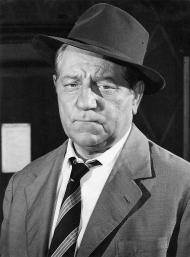
Jean Gabin [ʒɑ̃ gabɛ̃] (eigentlich Jean-Alexis Moncorgé; * 17. Mai 1904 in Paris; † 15. November 1976 in Neuilly-sur-Seine) war ein französischer Schauspieler und (in seinen jungen Jahren) Chansonnier. Ab den späten 1930er Jahren zählte er zu den führenden Charakterdarstellern des französischen Kinos und genoss auch international großes Renommee.
Lesen Sie mehr...Marlene Dietrich
John Wayne
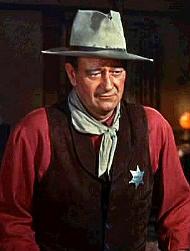
John Wayne (* 26. Mai 1907 in Winterset, Iowa als Marion Robert Morrison, später umbenannt in Marion Mitchell Morrison; † 11. Juni 1979 in Los Angeles, Kalifornien), Spitzname Duke, war ein US-amerikanischer Filmschauspieler. Er zählte zu den einflussreichsten, erfolgreichsten und bestbezahlten Hollywood-Schauspielern seiner Zeit.
Während seiner 50-jährigen Karriere trat Wayne kontinuierlich als Hauptdarsteller von Westernfilmen in Erscheinung. Der 1,93 Meter große Wayne prägte in Rollen wie der des rauhbeinigen Westmannes, Sheriffs, Marshals und Kavallerie-Kommandeurs in entscheidender Weise das Bild dieses Filmgenres.
Für Der Marshal (1969) gewann Wayne den Oscar als Bester Hauptdarsteller. Er spielte in Westernklassikern wie Ringo (1939), Red River (1948), Der schwarze Falke (1956), Rio Bravo (1959) oder Der Mann, der Liberty Valance erschoß (1962) und war auch häufig in Kriegs- und Abenteuerfilmen zu sehen. Als Schauspieler und Privatmann personifizierte er die traditionellen Wertvorstellungen der Pionierzeit und wurde zu einer überlebensgroßen Figur der amerikanischen Filmgeschichte. Wayne war vor allem in den USA unter dem Spitznamen „Duke“ („Herzog“) bekannt, nach einem Hund, den er als Kind hatte.
Lesen Sie mehr...Marlene Dietrich
Yul Brynner

Yul Brynner (nacido como Yuliy Borisovich Briner; Vladivostok, 11 de julio de 1920-Nueva York, 10 de octubre de 1985) fue un actor ruso, reconocido por su distintiva presencia escénica y su icónica cabeza rapada. Ganador del premio Óscar al mejor actor por su interpretación del rey de Siam en El rey y yo (1956), Brynner se destacó en roles memorables como Ramsés II en Los diez mandamientos (1956), Chris Adams en Los siete magníficos (1960) y el pistolero robótico en Westworld (1973). Su carrera abarcó teatro, cine y televisión, siendo especialmente célebre por interpretar más de 4600 veces el papel protagonista en la obra musical El rey y yo en Broadway y giras internacionales. Además de su talento actoral, Brynner fue un activista contra el tabaquismo tras ser diagnosticado con cáncer de pulmón, enfermedad que finalmente causó su muerte a los 65 años, dejando un legado perdurable en la cultura popular.
Lesen Sie mehr...Marlene Dietrich
John F. Kennedy

John Fitzgerald Kennedy (May 29, 1917 – November 22, 1963), also known as JFK, was the 35th president of the United States, serving from 1961 until his assassination in 1963. He was the youngest person elected president, at 43 years, and the first Catholic president. Kennedy served at the height of the Cold War, and the majority of his foreign policy concerned relations with the Soviet Union and Cuba. A member of the Democratic Party, Kennedy represented Massachusetts in both houses of the United States Congress before his presidency.
Born into the prominent Kennedy family in Brookline, Massachusetts, Kennedy graduated from Harvard University in 1940, joining the U.S. Naval Reserve the following year. During World War II, he commanded PT boats in the Pacific theater. Kennedy's survival following the sinking of PT-109 and his rescue of his fellow sailors made him a war hero and earned the Navy and Marine Corps Medal, but left him with serious injuries. After a brief stint in journalism, Kennedy represented a working-class Boston district in the U.S. House of Representatives from 1947 to 1953. He was subsequently elected to the U.S. Senate, serving as the junior senator from Massachusetts from 1953 to 1960. While in the Senate, Kennedy published his book Profiles in Courage, which won a Pulitzer Prize. Kennedy ran in the 1960 presidential election. His campaign gained momentum after the first televised presidential debates in American history, and he was elected president, narrowly defeating Republican opponent Richard Nixon, the incumbent vice president.
Kennedy's presidency saw high tensions with communist states in the Cold War. He increased the number of American military advisers in South Vietnam, and the Strategic Hamlet Program began during his presidency. In 1961, he authorized attempts to overthrow the Cuban government of Fidel Castro in the failed Bay of Pigs Invasion and Operation Mongoose. In October 1962, U.S. spy planes discovered Soviet missile bases had been deployed in Cuba. The resulting period of tensions, termed the Cuban Missile Crisis, nearly resulted in nuclear war. In August 1961, after East German troops erected the Berlin Wall, Kennedy sent an army convoy to reassure West Berliners of U.S. support, and delivered one of his most famous speeches in West Berlin in June 1963. In 1963, Kennedy signed the first nuclear weapons treaty. He presided over the establishment of the Peace Corps, Alliance for Progress with Latin America, and the continuation of the Apollo program with the goal of landing a man on the Moon before 1970. He supported the civil rights movement but was only somewhat successful in passing his New Frontier domestic policies.
On November 22, 1963, Kennedy was assassinated in Dallas. His vice president, Lyndon B. Johnson, assumed the presidency. Lee Harvey Oswald was arrested for the assassination, but he was shot and killed by Jack Ruby two days later. The Federal Bureau of Investigation (FBI) and the Warren Commission both concluded Oswald had acted alone, but conspiracy theories about the assassination persist. After Kennedy's death, Congress enacted many of his proposals, including the Civil Rights Act of 1964 and the Revenue Act of 1964. He ranks highly in polls of U.S. presidents with historians and the general public. His personal life has been the focus of considerable sustained interest following public revelations in the 1970s of his chronic health ailments and extramarital affairs. Kennedy is the most recent U.S. president to have died in office.
Lesen Sie mehr...Marlene Dietrich
Wilhelm Michel
Wilhelm Michel, genannt Willy Michel (geboren 1901; gestorben Juni 1988) war ein deutscher Bäcker, Kommunalpolitiker in Hannover, Wehrwirtschaftsführer für Niedersachsen sowie Liebessubjekt der Schauspielerin Marlene Dietrich. Die Anfang des 21. Jahrhunderts aufgefundenen Liebesbriefe der Dietrich an Wilhelm Michel gelten als „die frühesten bislang bekannten Dokumente des Weltstars.“
Lesen Sie mehr...Marlene Dietrich
Erich Maria Remarque

Erich Maria Remarque (* 22. Juni 1898 in Osnabrück als Erich Paul Remark; † 25. September 1970 in Locarno, Schweiz) war ein deutscher Schriftsteller. Er wurde mit dem 1928 erstmals erschienenen, zuerst 1930 in Hollywood verfilmten Antikriegsroman Im Westen nichts Neues weltberühmt. 1931 erwarb Remarque die Casa Monte Tabor am Lago Maggiore und verlegte seinen Wohnsitz in die Schweiz. Im NS-Staat wurden seine Bücher verboten und 1933 öffentlich verbrannt. 1938 wurde ihm die deutsche Staatsbürgerschaft aberkannt. 1939 emigrierte er in die USA, wo er Anerkennung als Schriftsteller fand. 1947 erhielt er die amerikanische Staatsbürgerschaft. 1948 kehrte er in die Schweiz zurück, hielt sich aber weiterhin häufig in den USA auf. Remarque wurde auch durch seine Beziehungen zu prominenten Frauen und als Kunstsammler bekannt. Seine überwiegend als pazifistisch eingestuften Romane, in denen er die Grausamkeit des Krieges thematisiert, finden bis heute weite Verbreitung.
Lesen Sie mehr...