Wer datete George Sand?
Félicien Mallefille war mit George Sand von ? bis ?. zusammen. Der Altersunterschied betrug 8 Jahre, 10 Monate und 2 Tage.
Alfred de Musset war mit George Sand von ? bis ?. zusammen. Der Altersunterschied betrug 6 Jahre, 5 Monate und 10 Tage.
Victor Borie war mit George Sand von ? bis ?. zusammen. Der Altersunterschied betrug 14 Jahre, 2 Monate und 10 Tage.
Alexandre Manceau war mit George Sand von ? bis ?. zusammen. Der Altersunterschied betrug 12 Jahre, 10 Monate und 2 Tage.
Prosper Mérimée war mit George Sand von ? bis ?. zusammen. Der Altersunterschied betrug 0 Jahre, 9 Monate und 3 Tage.
Jules Sandeau war mit George Sand von ? bis ?. zusammen. Der Altersunterschied betrug 6 Jahre, 7 Monate und 18 Tage.
Michel de Bourges war mit George Sand von bis . zusammen. Der Altersunterschied betrug 6 Jahre, 8 Monate und 1 Tage.
Frédéric Chopin war mit George Sand von bis . zusammen. Der Altersunterschied betrug 5 Jahre, 8 Monate und 0 Tage.
George Sand

George Sand ([ʒɔʁʒ sɑ̃d]) ist das Pseudonym der französischen Schriftstellerin Amantine Aurore Lucile Dupin de Francueil (* 1. Juli 1804 in Paris; † 8. Juni 1876 in Nohant, Département Indre), die neben Romanen auch zahlreiche gesellschaftskritische Beiträge veröffentlichte. Sie setzte sich durch ihre unkonventionelle Lebensweise und ihre Werke für feministische und sozialkritische Ziele ein. Sie rebellierte gegen Beschränkungen, die Frauen im 19. Jahrhundert durch die Ehe auferlegt waren, und forderte die gleichberechtigte Teilhabe aller Klassen an gesellschaftlichen Gütern ein.
Lesen Sie mehr...Félicien Mallefille

Jean Pierre Félicien Mallefille (May 3, 1813 – November 24, 1868) was a French novelist and playwright.
Mallefille was born in Mauritius. He wrote a number of plays, including Glenarvon (1835), Les sept enfants de Lara (1836), Le cœur et la dot (1852), and Les sceptiques (1867), as well as two comedies, and two novels, Le collier (1845) and La confession du Gaucho (1868). A farce of his, Les deux veuves, later formed the basis of the libretto for Bedřich Smetana's opera The Two Widows.
He also wrote a scenario in French that was to have been the basis of a libretto for the opera Sardanapalo by Franz Liszt, but delivered it so late that Liszt, angered at his unreliability, had commissioned an Italian libretto from another writer; in the end the opera was never completed.
Mallefille also had a relationship with George Sand.
Lesen Sie mehr...George Sand
Alfred de Musset

Alfred Louis Charles de Musset-Pathay (French: [alfʁɛd də mysɛ]; 11 December 1810 – 2 May 1857) was a French dramatist, poet, and novelist. Along with his poetry, he is known for writing the autobiographical novel La Confession d'un enfant du siècle (The Confession of a Child of the Century).
Lesen Sie mehr...George Sand
Victor Borie

Victor Borie, né le à Tulle et mort le à Paris 6e, est un journaliste français.
Lesen Sie mehr...George Sand
Alexandre Manceau

Alexandre Manceau, né à Trappes le et mort à Palaiseau le , est un graveur et auteur dramatique français.
Lesen Sie mehr...George Sand
Prosper Mérimée
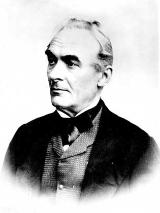
Prosper Mérimée (* 28. September 1803 in Paris; † 23. September 1870 in Cannes) war ein französischer Schriftsteller.
Lesen Sie mehr...George Sand
Jules Sandeau
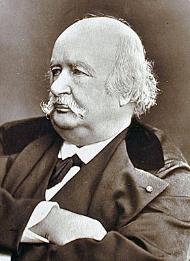
Jules Sandeau (* 19. Februar 1811 in Aubusson (Creuse); † 24. April 1883 in Paris) war ein französischer Schriftsteller und Mitglied der Académie française.
Lesen Sie mehr...George Sand
Michel de Bourges
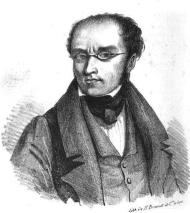
Louis-Chrysostome Michel, dit Michel de Bourges, né à Pourrières (Var) en 1797 et mort à Montpellier en 1853, est un avocat et homme politique français.
Lesen Sie mehr...George Sand
Frédéric Chopin

Frédéric François Chopin (born Fryderyk Franciszek Chopin; 1 March 1810 – 17 October 1849) was a Polish composer and virtuoso pianist of the early Romantic period who wrote primarily for solo piano. He has maintained worldwide renown as a leading composer of his era whose "poetic genius was based on a professional technique that was without equal in his generation".
Chopin was born in Żelazowa Wola and grew up in Warsaw, which in 1815 became part of Congress Poland. A child prodigy, he completed his musical education and composed his early works in Warsaw before leaving Poland at age 20, less than a month before the outbreak of the November 1830 Uprising; at 21, he settled in Paris. Thereafter he gave only 30 public performances, preferring the more intimate atmosphere of the salon. He supported himself by selling his compositions and giving piano lessons, for which he was in high demand. Chopin formed a friendship with Franz Liszt and was admired by many musical contemporaries, including Robert Schumann. After a failed engagement to Maria Wodzińska from 1836 to 1837, he maintained an often troubled relationship with the French writer Aurore Dupin (known by her pen name George Sand). A brief and unhappy visit to Mallorca with Sand in 1838–39 proved one of his most productive periods of composition. In his final years he was supported financially by his admirer Jane Stirling. In poor health most of his life, Chopin died in Paris in 1849 at age 39.
All of Chopin's compositions feature the piano. Most are for solo piano, though he also wrote two piano concertos before leaving Warsaw, some chamber music, and 19 songs set to Polish lyrics. His piano pieces are technically demanding and expanded the limits of the instrument; his own performances were noted for their nuance and sensitivity. Chopin's major piano works include mazurkas, waltzes, nocturnes, polonaises, the instrumental ballade (which Chopin created as an instrumental genre), études, impromptus, scherzi, preludes, and sonatas, some published only posthumously. Among the influences on his style of composition were Polish folk music, the classical tradition of Mozart and Schubert, and the atmosphere of the Paris salons, of which he was a frequent guest. His innovations in style, harmony, and musical form, and his association of music with nationalism, were influential throughout and after the late Romantic period.
Chopin's music, his status as one of music's earliest celebrities, his indirect association with political insurrection, his high-profile love life, and his early death have made him a leading symbol of the Romantic era. His works remain popular, and he has been the subject of numerous films and biographies of varying historical fidelity. Among his many memorials is the Fryderyk Chopin Institute, which was created by the Polish parliament to research and promote his life and works, and which hosts the prestigious International Chopin Piano Competition, devoted entirely to his works.
Lesen Sie mehr...