Wer datete Isabelle de Limeuil?
Florimond Robertet of Fresnes war mit Isabelle de Limeuil von ? bis ?. zusammen.
Claude de Lorraine, duc d’Aumale war mit Isabelle de Limeuil von ? bis ?. zusammen.
Louis I. de Bourbon, prince de Condé war mit Isabelle de Limeuil von ? bis ?. zusammen.
Isabelle de Limeuil
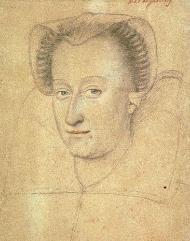
Isabelle de la Tour, Lady of Limeuil (c. 1535 – 25 March 1609) was a French noblewoman and a Maid of Honour to the Queen Mother Catherine de' Medici. She also formed part of Catherine's notorious "flying squadron" (L'escadron volant), a group of beautiful female spies she used for the purpose of forming sexual liaisons with various powerful men at the French court thereby extracting information which would then be passed on to her. In about 1562 at Catherine's instigation, she became the mistress of Louis, Prince of Condé, brother of King Antoine of Navarre and one of the leading Huguenots in France. Two years later when Isabelle created a scandal by giving birth to his son whilst the court was on a royal progress, she was banished to a convent.
She later married wealthy Tuscan banker Scipion Sardini, a favoured protégé of Catherine de' Medici.
Lesen Sie mehr...Florimond Robertet of Fresnes
Florimond II Robertet de Fresne (1531–1567) was a Secretary of State to French kings Francis II and Charles IX. He served in that role from the age of 26 until his death ten years later.
Robertet was born into a family that was supported by the House of Guise. His father, Francis Robertet, served as secretary to Peter II, who, with his wife, Anne of France, ruled the kingdom during the minority of her brother, Charles VIII.
Lesen Sie mehr...Isabelle de Limeuil
Claude de Lorraine, duc d’Aumale

Claude II. de Lorraine (* 18. August 1526 in Joinville; † 3. März 1573 bei der Belagerung von La Rochelle) war Markgraf von Mayenne und ab 1550 Herzog von Aumale.
Lesen Sie mehr...Isabelle de Limeuil
Louis I. de Bourbon, prince de Condé
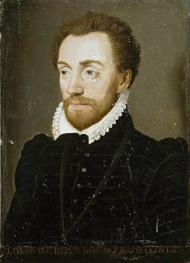
Louis I. de Bourbon, Fürst von Condé (* 7. Mai 1530 in Vendôme; † 13. März 1569 in der Schlacht bei Jarnac) war ein französischer Feldherr und Begründer des Hauses Condé, einer Seitenlinie des Hauses Bourbon. Nach seinem Übertritt zum Protestantismus führte er die calvinistische Partei während der Hugenottenkriege. Er war neben dem König von Navarra ein Prinz der hugenottischen Linie der französischen Könige.
Lesen Sie mehr...